Why Every Startup Needs a Brand Identity Before a Website
Mahnoor Khan
Alpha Global
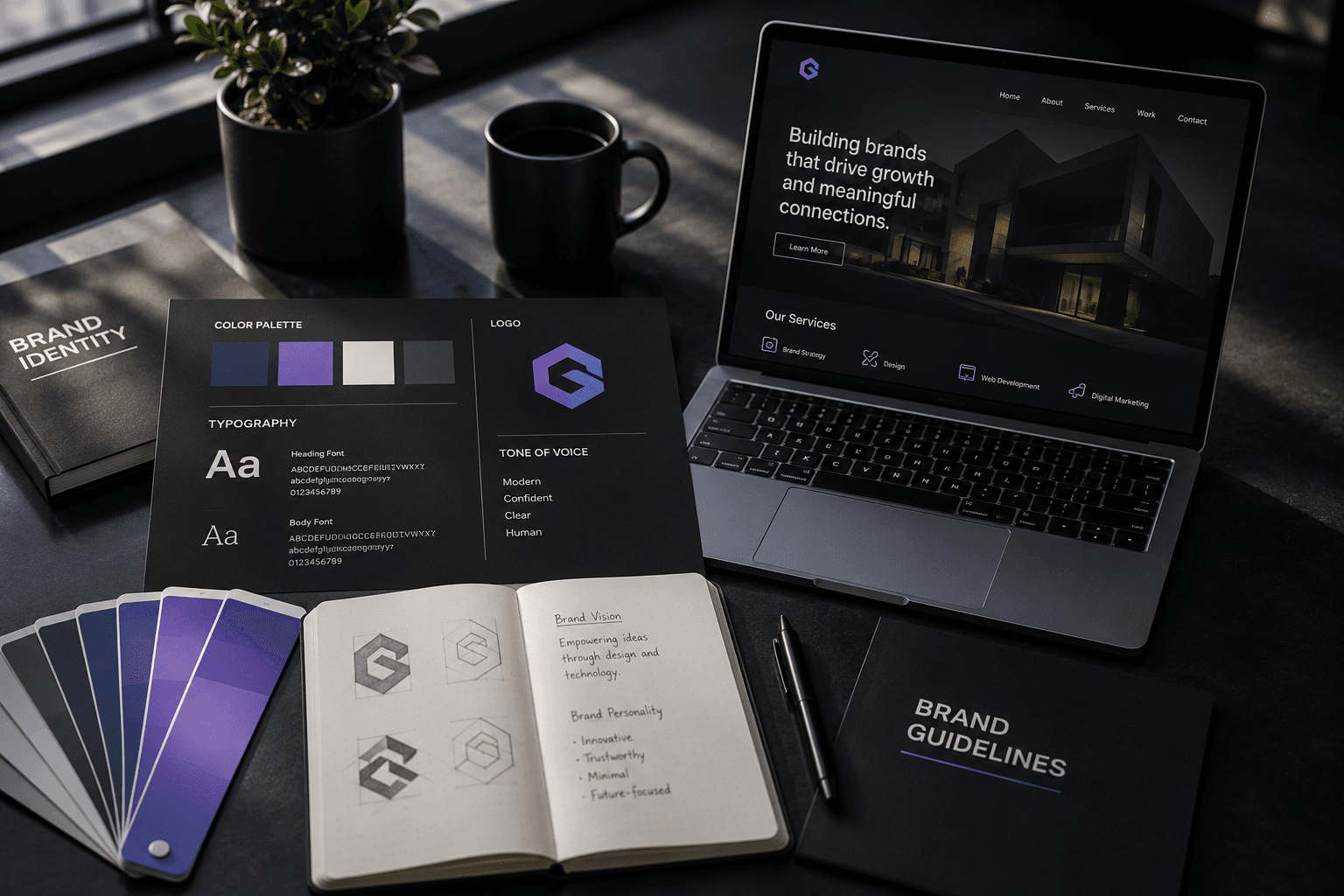
We get this request often: 'Can you just build the website first? We'll figure out branding later.' It's understandable — a website feels like the more urgent deliverable. But skipping brand identity rarely saves time. It usually just moves the cost to later, when a redesign is more expensive than doing it right the first time.
A website without a brand is just a template with your name on it
Without a defined color palette, typography, and visual language, every design decision on your website becomes a guess. The result usually looks like a generic template — technically functional, but forgettable, and indistinguishable from a dozen competitors.
Identity gives your designer and developer a shared language
A brand identity isn't just a logo — it's a decision-making framework. When a designer knows your color system, type scale, and tone of voice, they can make dozens of small decisions consistently instead of asking you to approve every button color individually.
It's cheaper to define it once than redesign it twice
We've rebuilt websites for clients who launched fast, then rebranded six months later and had to redo the entire site to match. The second website almost always costs more than the brand identity would have upfront — and it comes with lost momentum on any marketing that pointed to the old look.
What a minimum viable brand identity actually includes
You don't need a 60-page brand book to start. A lean, functional identity that unblocks a website build includes:
- A primary logo and a simplified mark for small spaces
- A core color palette (2-4 colors) with defined usage
- A typography system — headline and body fonts
- A short description of tone of voice
That's enough to brief a designer and developer confidently, launch a consistent website, and expand the brand system later as the business grows — without starting over.